
Is Artificial Turf a Good Choice for Outdoor Dining Areas?
Yes, artificial turf can be a smart choice for outdoor dining areas because it creates a consistently green, attractive surface without mowing or routine irrigation. Commercial-grade turf can also withstand regular foot traffic and eliminate common natural-grass problems such as mud and worn patches. Proper drainage, professional installation, and routine cleaning are important for dining spaces where spills and heavy use are common.
For restaurants, hospitality properties, and homeowners, an outdoor dining area should feel like an extension of the space around it, not an afterthought. All American Turf Solutions helps customers create inviting outdoor environments with artificial turf systems selected for appearance, durability, drainage, and intended use. Unlike natural grass, artificial turf does not depend on favorable growing conditions to maintain consistent coverage. That makes it particularly useful around patios, seating areas, gathering spaces, and other locations that experience frequent activity. With thoughtful planning and professional installation, turf can turn an underused or difficult-to-maintain area into a comfortable, polished setting for dining and entertaining.
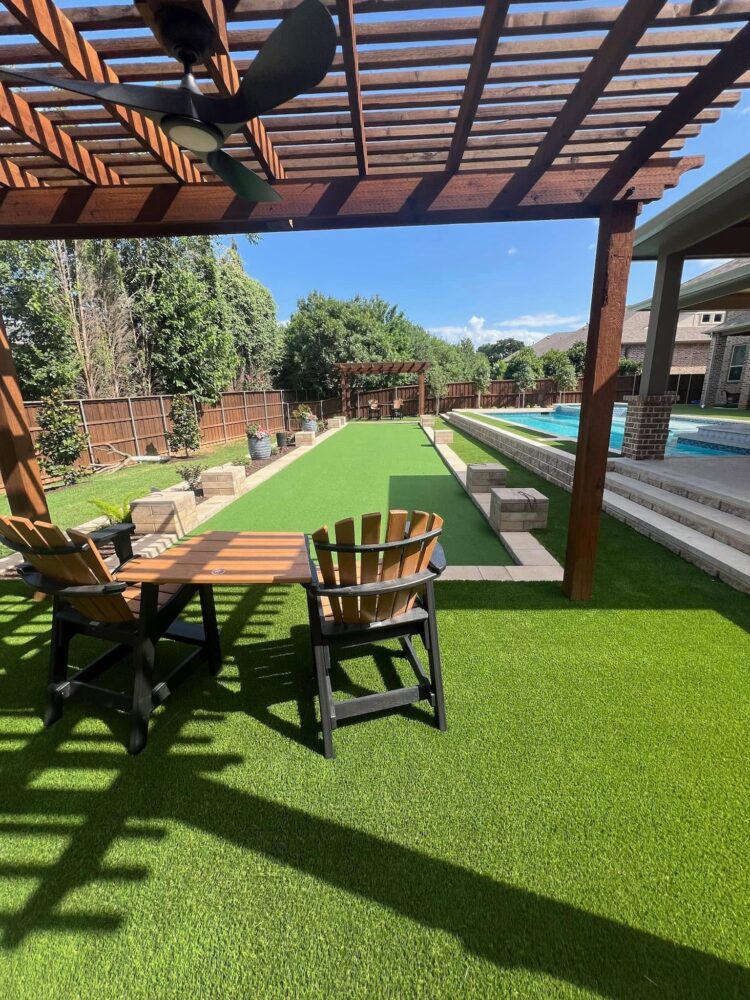
Why Artificial Grass Works Well for Patios and Outdoor Dining Spaces
Artificial grass combines the visual appeal of landscaping with the practicality needed in a frequently used outdoor area. Commercial turf manufacturer Shawgrass specifically lists restaurants, hotels, rooftops, common areas, and other commercial spaces among applications for its artificial turf products. The company emphasizes durability and simple maintenance as advantages for commercial environments.
For an outdoor dining space, those qualities can translate into several practical benefits:
- No mowing around tables or seating
- No routine irrigation required to keep the surface green
- No muddy natural-grass areas after rain
- Consistent coverage in frequently used spaces
- A softer visual alternative to covering an entire area with concrete
- Flexible design possibilities for patios and gathering areas
The right turf should always be selected according to expected traffic, drainage requirements, furniture placement, and maintenance needs.
Does Artificial Turf Hold Up to Heavy Foot Traffic?
Commercial-grade artificial turf can be designed for high-traffic areas, making it a practical option for busy patios, restaurants, event spaces, and gathering areas.
Natural grass can struggle when people repeatedly walk across the same paths or when tables and chairs occupy a space for long periods. Compacted soil and damaged grass can eventually lead to bare patches and mud.
Artificial turf does not rely on living roots to recover from traffic. Shawgrass describes commercial artificial turf as designed for strength, resilience, and consistent performance in real-world commercial environments.
That makes turf particularly useful for spaces such as:
- Restaurant patios
- Outdoor waiting areas
- Backyard dining spaces
- Hotel gathering areas
- Outdoor kitchens
- Event spaces
- Seating and lounge areas
For heavily used commercial spaces, choosing turf intended for commercial applications is important. Residential landscape turf is not automatically the best choice for every restaurant or hospitality project.
Can Artificial Turf Make an Outdoor Dining Area Easier to Maintain?
Artificial turf eliminates many of the recurring landscaping tasks associated with maintaining natural grass around a dining area. There is no mowing, fertilizing, reseeding, or routine watering required to keep artificial grass green.
That does not mean an artificial turf dining area is maintenance-free. Leaves, food, dirt, and other debris still need to be removed. Spills should be addressed promptly, and high-traffic areas may require periodic grooming.
A practical maintenance routine can include:
- Remove leaves and loose debris regularly.
- Clean food and beverage spills promptly.
- Rinse areas when needed.
- Brush flattened or heavily trafficked sections periodically.
- Inspect drainage and seams as part of ongoing maintenance.
- Schedule more thorough cleaning when normal maintenance is no longer sufficient.
Commercial dining areas generally need more frequent attention than lightly used residential turf because food, drinks, and constant foot traffic can create additional cleaning demands.
The benefit is that maintenance is focused primarily on keeping the surface clean and presentable rather than keeping living grass alive.
Does Artificial Grass Reduce Water Use Around Outdoor Dining Areas?
Replacing irrigated natural grass with artificial turf eliminates the routine landscape irrigation needed to keep that portion of a property green.
The U.S. Environmental Protection Agency reports that outdoor water use accounts for about 30 percent of household water consumption nationwide and can be considerably higher in dry regions. The EPA also estimates that residential outdoor water use totals nearly 8 billion gallons each day in the United States, primarily for landscape irrigation.
Although those statistics are residential rather than restaurant-specific, they illustrate how significant landscape irrigation can be.
Artificial turf may still require occasional water for cleaning spills, dust, pollen, or pet-related areas. However, it does not need routine watering for growth.
For a business or homeowner trying to reduce irrigation demands, converting selected gathering areas from natural grass to artificial turf can be one component of a broader water-conscious landscape design.
How Does Turf Improve the Look and Feel of an Outdoor Dining Space?
Artificial turf can help define an outdoor dining area and provide consistent visual greenery without relying on natural grass growing successfully beneath and around furniture.
An outdoor dining space has to do more than function well. It should also feel welcoming.
Turf can be used to visually separate dining or lounge areas from surrounding hardscaping. It can also soften spaces dominated by concrete, pavers, walls, or outdoor furniture.
Design possibilities include using artificial grass:
- Under or alongside patio seating
- Between hardscape sections
- Around an outdoor kitchen
- In lounge and conversation areas
- Around walkways or gathering spaces
- As part of a mixed turf and paver design
Restaurants may also use turf to help create an outdoor environment that feels distinct from the interior dining room. For homeowners, the same concept can make a backyard dining area feel more intentional and connected to the surrounding landscape.
The best design balances aesthetics with practical details. Table and chair stability, walking paths, drainage, food service, accessibility, and cleaning should all be considered before installation.
What Should You Consider Before Installing Turf in a Dining Area?
Drainage, intended use, traffic levels, furniture, and cleaning requirements should all be evaluated before artificial turf is installed in an outdoor dining space.
Proper preparation beneath the turf is particularly important. A beautiful surface will not compensate for poor grading or inadequate drainage.
Before installation, consider:
- Drainage: Water needs an appropriate path away from the dining area.
- Traffic: Restaurants and event spaces may need products designed for heavier commercial use.
- Furniture: The layout should account for tables, chairs, outdoor kitchens, and other fixtures.
- Cleaning: Food-service environments need a plan for prompt spill and debris removal.
- Heat: Artificial turf can become hot in direct sunlight, so shade structures and the overall design should be considered for guest comfort.
- Surrounding surfaces: Turf should transition cleanly into concrete, pavers, decking, landscaping, or other materials.
Professional installation helps address these details before they become problems. All American Turf Solutions can evaluate how the space will be used and recommend an installation approach suited to the property rather than treating every turf project the same way.
Frequently Asked Questions About Turf for Outdoor Dining Areas
Is artificial grass good for restaurant patios?
Yes. Artificial turf can provide restaurant patios with consistent greenery while eliminating mowing and routine irrigation. Commercial spaces should use turf suited to expected foot traffic and have appropriate drainage and maintenance plans.
Can you put tables and chairs on artificial turf?
Yes, outdoor tables and chairs can be placed on appropriately installed artificial turf. Furniture selection and placement should be considered during the design process, especially in commercial areas where seating is frequently moved.
What happens to artificial turf when it rains?
A properly designed artificial turf installation allows water to drain through or away from the surface according to the turf system and base design. Proper grading and drainage preparation are therefore important parts of installation.
Is artificial turf easy to clean around food and drinks?
Artificial turf can be maintained in dining areas, but food and beverage spills should be cleaned promptly. Busy commercial dining spaces may require more frequent debris removal, rinsing, grooming, and periodic deeper cleaning than residential landscape turf.
Upgrade Your Outdoor Dining Area with Artificial Turf
An outdoor dining space should be attractive, comfortable, and practical to maintain. Artificial turf can provide consistent greenery while reducing many of the challenges associated with natural grass, including mowing, routine irrigation, muddy patches, and damage from frequent foot traffic.
Whether you are improving a restaurant patio, hospitality property, backyard dining area, or outdoor entertaining space, the details of the installation matter.
Ready to transform your outdoor dining area? Contact All American Turf Solutions today to explore artificial turf options for your space.