Does Artificial Turf Drain Well After Heavy Rain in DFW?
Yes, properly installed artificial turf can drain very well after heavy rain in DFW. A permeable turf system allows rainwater to move through the turf and into a properly prepared drainage base below. The quality of the turf, base preparation, grading, and drainage design all play an important role in preventing puddles and standing water.
At All American Turf Solutions, we understand that North Texas yards need to handle more than heat and drought. Heavy downpours can quickly turn natural grass into a muddy, soggy mess, especially in areas with existing drainage challenges. Our team installs artificial turf systems with long-term performance in mind, including careful site preparation and drainage considerations. Whether you are improving a backyard, pet area, playground, putting green, or commercial property, professional installation helps ensure your turf is ready for changing Texas weather. The goal is not simply a greener lawn. It is a clean, attractive, functional outdoor space that can handle real-world use throughout the year.
How Artificial Grass Drainage Helps DFW Yards Handle Rain
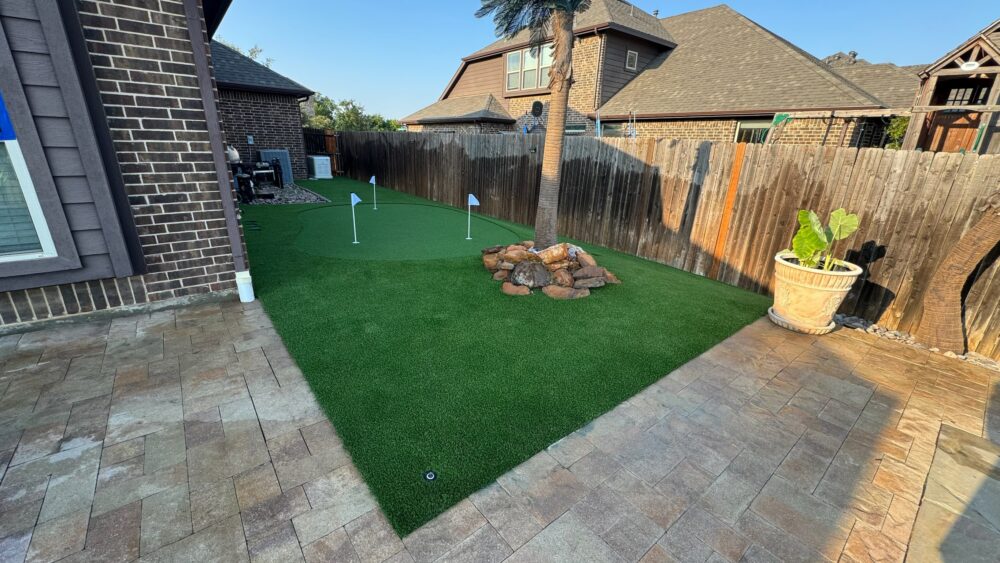
Drainage is one of the most important parts of a successful artificial turf installation. The turf surface, underlying base, grading, and existing site conditions must work together to move water away efficiently.
This is especially important in Dallas-Fort Worth. According to the National Weather Service, DFW’s 1991-2020 climate normal is approximately 37 inches of precipitation per year. May averages 4.78 inches, while October averages 4.37 inches, making both months among the wetter parts of the year.
Recent conditions offer a timely reminder of how quickly North Texas weather can change. In early October 2026, the National Weather Service Fort Worth/Dallas office warned of heavy rain and flooding concerns across parts of North and Central Texas, with isolated additional rainfall totals of 2 to 4 inches possible.
For homeowners, periods like these make good drainage especially valuable.
How Does Artificial Turf Drain Water?
Most permeable artificial turf systems are designed so water can pass through the turf backing and into the prepared base underneath.
According to the Synthetic Turf Council, synthetic turf and its base are generally designed to allow water to percolate through the system so standing water does not remain on the surface. The organization also notes that water permeability should be designed around local rainfall and weather patterns.
A properly planned turf installation typically considers:
- Permeable turf backing: Openings allow water to move through the turf rather than remaining on top.
- Prepared aggregate base: The material underneath the turf provides stability while helping water move away from the surface.
- Proper grading: The installation area should direct water appropriately instead of allowing it to collect in low spots.
- Existing drainage conditions: Downspouts, slopes, surrounding hardscapes, low areas, and other property-specific factors should be evaluated before installation.
The Synthetic Turf Council has reported that permeable synthetic grass systems are typically designed to drain as much as 25 inches of water per hour, although actual drainage performance depends on the complete system and site conditions.
That last point matters. Artificial grass alone does not solve every drainage problem. The system underneath it is critical.
Will Artificial Turf Get Muddy After Heavy Rain?
Artificial turf itself does not turn into mud because there is no exposed natural soil at the surface. With a properly installed base and adequate drainage, rainwater can move through the system while the turf remains relatively clean and usable.
That can make a noticeable difference for families with children or pets. Natural lawns can become soft, muddy, and damaged after repeated rainfall and foot traffic. Mud may then end up on shoes, paws, patios, and floors.
Artificial turf provides a consistent surface without the exposed dirt that creates a muddy lawn. After rainfall has drained, homeowners can often get back to enjoying their outdoor space without waiting for natural grass and soil to dry out.
This can be particularly appealing for:
- Dog runs and pet areas
- High-traffic backyards
- Children’s play spaces
- Pool surrounds
- Outdoor entertaining areas
- Commercial courtyards and common areas
Why Is the Base Under Artificial Turf So Important?
The base is one of the most important factors affecting artificial turf drainage and long-term performance. Even high-quality turf can develop drainage problems if the site underneath it is not prepared correctly.
The Synthetic Turf Council’s guidelines for turf base systems specifically address drainage and stability as critical elements of synthetic turf design and construction.
Before installing turf, an experienced installer should evaluate the property and determine how water currently moves through the area. Preparation may include removing existing grass and soil, establishing the appropriate grade, installing and compacting aggregate base material, and addressing site-specific drainage concerns.
This is also why two artificial turf installations can perform very differently during the same rainstorm. Turf selection matters, but professional preparation beneath the surface matters just as much.
Can Heavy Rain Damage Artificial Turf?
Normal rain, including periods of heavy rainfall, should not damage a properly selected and professionally installed artificial turf system. Artificial grass is designed for outdoor exposure, including moisture.
However, artificial turf should not be treated as a cure for major property drainage or flooding issues. Extreme storms can overwhelm municipal drainage, natural drainage paths, and residential properties regardless of the type of landscaping installed.
If water repeatedly pools in one area of your yard, flows toward your home’s foundation, or collects because of surrounding hardscapes or grading, those conditions should be evaluated before turf is installed.
A professional site assessment helps determine whether a standard permeable turf system is appropriate or whether additional drainage measures should be considered.
Is Artificial Turf Better Than Natural Grass During Rainy Weather?
For homeowners who are primarily concerned about mud, lawn damage, and maintaining a usable surface, artificial turf offers several advantages during wet weather.
Natural grass grows in soil, which can become saturated after repeated or intense rainfall. Walking or playing on saturated lawns may create mud, ruts, bare patches, and compacted areas.
Artificial turf creates a stable surface above a prepared base. When drainage is designed correctly, rain passes through the turf instead of turning the yard into a muddy surface.
Artificial turf also eliminates the need to mow wet grass or wait for muddy areas to recover after storms. That can mean less weather-related lawn maintenance and a more consistently usable outdoor area throughout the year.
Frequently Asked Questions About Artificial Turf and Rain
Does water go through artificial turf?
Yes. Permeable artificial turf systems are designed to allow water to pass through the turf backing and into the drainage base below. The drainage capacity of the complete installation depends on the turf product, base construction, grading, and site conditions.
Why is water pooling on artificial turf?
Pooling can indicate a problem with grading, the base, drainage beneath the turf, or an unusually large volume of water entering the area. Persistent standing water should be evaluated rather than assumed to be normal.
How long does artificial turf take to dry after rain?
Drying time varies based on rainfall amount, humidity, temperature, sunlight, airflow, turf type, and drainage conditions. A well-draining installation can move water below the surface quickly, although the turf fibers may remain wet for some time afterward.
Is artificial turf good for dogs when it rains?
Artificial turf can be especially useful for pet owners because the surface does not turn into exposed mud after rain. A properly designed pet turf system should also prioritize drainage so water and liquids can move through the surface efficiently.
Ready for a Yard That Handles North Texas Weather?
Heavy rain can reveal exactly where a yard struggles with mud, standing water, and poor drainage. If recent DFW storms have left you looking at a soggy lawn and thinking there has to be a better option, artificial turf may be worth considering.
At All American Turf Solutions, we install artificial turf with the entire property in mind, from the surface you see to the preparation and drainage underneath it. Our team can help you create a clean, attractive, low-maintenance outdoor space designed for the demands of North Texas weather.
Ready to leave muddy grass behind? Contact All American Turf Solutions to discuss artificial turf for your DFW property.