Is Artificial Turf a Good Choice for Mud-Prone Backyards in DFW?
Yes, artificial turf is a practical choice for mud-prone backyards because it replaces exposed soil and natural grass with a stable, permeable surface installed over a prepared base. When properly installed, artificial turf helps reduce mud, improves drainage, withstands frequent foot and pet traffic, and keeps outdoor spaces more usable after rain.
At All American Turf Solutions, we help DFW homeowners create outdoor spaces that are easier to enjoy and maintain throughout the year. A backyard that constantly turns muddy can be frustrating, especially when kids and dogs track that mud back into the house. Our team looks beyond the appearance of the finished turf and considers important factors such as grading, drainage, base preparation, traffic, pets, and how your family uses the yard. With professional installation and turf selected for the application, homeowners can replace struggling grass and messy dirt areas with a clean, durable surface designed for everyday life in North Texas.
How Artificial Grass Can Solve Muddy Backyard Problems
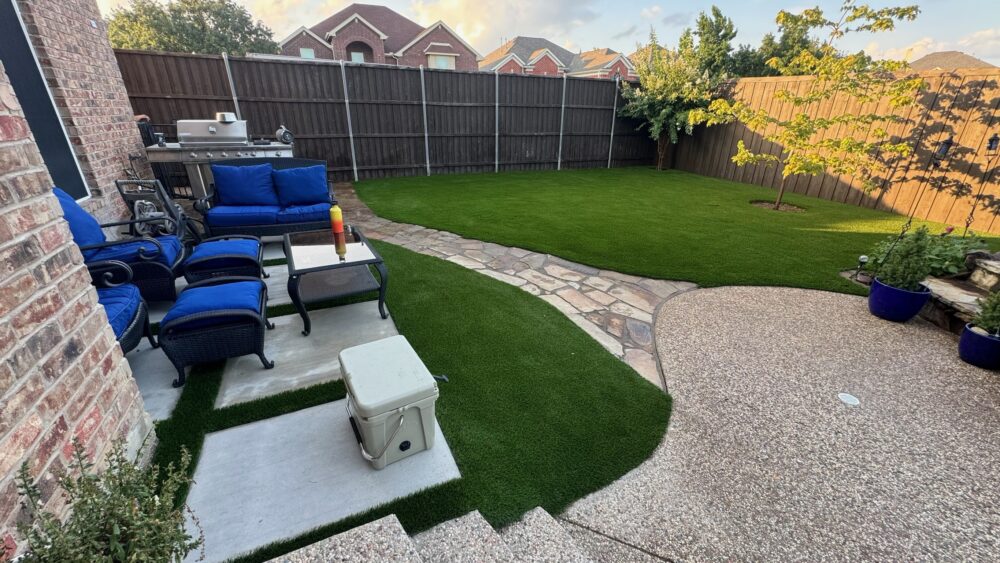
Artificial grass addresses one of the main causes of a muddy backyard by removing exposed soil from the usable surface. Instead of walking, playing, or running directly on saturated ground, your family and pets use turf installed over a prepared aggregate base.
That benefit can be particularly useful in DFW. According to the National Weather Service, Dallas-Fort Worth receives an average of 37.01 inches of precipitation per year based on 1991-2020 climate normals. May averages 4.78 inches of precipitation and October averages 4.37 inches, so muddy lawn conditions are not limited to one season.
Why Does My Backyard Get So Muddy When It Rains?
Backyards become muddy when the soil receives more water than it can absorb or drain away efficiently. Poor grading, compacted soil, heavy foot traffic, shade, drainage issues, and thin or damaged grass can make the problem worse.
Some areas of a yard may be especially vulnerable. Common problem spots include:
- Areas where dogs regularly run or play
- Paths children use frequently
- Spaces underneath play equipment
- Shady areas where natural grass struggles to grow
- Low spots that collect water
- Areas near patios or other hardscapes
- Narrow side yards with frequent traffic
Natural grass can help stabilize soil when it is healthy and dense. When grass becomes thin or dies, however, the exposed soil underneath can quickly become mud during rainy periods.
Simply reseeding or replacing sod may not solve the underlying problem if shade, traffic, pets, or drainage conditions continue to damage the lawn.
How Does Artificial Turf Help Prevent Mud?
Artificial turf helps prevent mud by creating a continuous surface between people or pets and the soil underneath. A properly prepared base also provides a stable foundation and helps manage water beneath the turf.
Unlike natural grass, artificial turf does not develop bare patches simply because children or pets repeatedly use the same part of the yard. There is no exposed topsoil at the surface to turn into mud after every rainstorm.
A professional installation typically considers several components:
- Site preparation: Existing grass and unsuitable surface material are removed.
- Grading: The area is shaped appropriately to help manage water movement.
- Base construction: Aggregate material creates a stable foundation beneath the turf.
- Turf installation: Permeable artificial grass allows water to move through the surface.
- Site-specific drainage: Existing drainage conditions are considered before and during installation.
The result is a backyard surface that can remain more consistent through changing weather and frequent use.
It is important to remember that artificial turf is not a cure for every drainage problem. Properties with significant standing water, flooding, or improper grading may require additional drainage solutions. Evaluating those conditions before installation is an important part of creating a turf system that performs properly.
Is Artificial Turf a Good Solution for Dogs and Muddy Paws?
Yes, artificial turf can be particularly useful for dog owners because it eliminates exposed soil from the pet’s primary play and bathroom areas. That means fewer opportunities for a dog to run through mud and carry it onto patios, furniture, floors, and carpets.
Dogs can also be tough on natural lawns. Repeated running creates worn paths, digging exposes soil, and frequent use can make it difficult for grass to recover. Once those areas become bare, the next rain can create even more mud.
Pet-friendly artificial turf provides a durable surface that does not depend on grass growth to remain covered.
For households with dogs, proper drainage is especially important. A pet turf system should allow rainwater and liquids to pass through the turf rather than remain trapped at the surface. Routine maintenance, including removing solid waste, rinsing appropriate areas, and keeping the turf free of debris, can also help maintain a cleaner pet space.
For DFW dog owners, this can mean spending less time wiping muddy paws at the back door and more time letting pets enjoy the yard.
Is Artificial Turf Better for Families With Kids?
Artificial turf can give families a more consistent outdoor play surface, particularly in areas where natural grass repeatedly becomes muddy, bare, or worn.
Children tend to use the same high-traffic areas again and again. Swing sets, playhouses, backyard soccer goals, trampolines, and routes between the house and play area can all contribute to worn natural grass.
Artificial turf does not need time to regrow after frequent use. It also eliminates the exposed soil responsible for muddy shoes and clothing after wet weather.
For families, some of the practical advantages include:
- No muddy bare spots from repeated play
- No mowing the turf surface
- A consistent appearance throughout the year
- Less dirt tracked from the yard into the house
- A durable surface for high-traffic spaces
- No need to reseed worn turf areas
Artificial turf can also be installed only where it makes the most sense. Homeowners do not necessarily have to replace an entire landscape. A troublesome play area, dog run, side yard, or section that never grows grass may be a good candidate for turf while other landscaping remains intact.
What Should You Consider Before Installing Turf in a Muddy Yard?
The source of the mud should be evaluated before artificial turf is installed. If a yard has significant drainage problems, covering the area without addressing what is happening underneath could lead to poor performance.
A professional installer should look at factors such as:
- Where water comes from during storms
- How the property is graded
- Whether water currently pools in low areas
- Nearby downspouts and drainage systems
- Soil and existing surface conditions
- Surrounding patios, walkways, and hardscapes
- How frequently children or pets use the area
The base beneath the turf is just as important as the artificial grass homeowners see on top. Proper preparation helps create the stable, permeable foundation needed for long-term performance.
This is one reason professional artificial turf installation matters. The goal should not simply be to cover a muddy area. It should be to create a backyard surface designed around the conditions of the property.
Frequently Asked Questions About Artificial Turf and Mud
Does artificial turf get muddy after rain?
Artificial turf itself does not turn into mud because the usable surface does not contain exposed soil. With proper base preparation and drainage, water can move through the turf while the surface remains protected from the muddy conditions common with bare or damaged natural grass.
Can you install artificial turf over a muddy yard?
Artificial turf should not simply be placed directly over mud or existing grass. Proper installation generally requires removing existing material, preparing and compacting a suitable base, establishing the appropriate grade, and addressing drainage conditions before installing the turf.
Is artificial turf worth it if you have dogs?
For homeowners struggling with muddy paws, worn grass, digging, or heavily trafficked pet areas, artificial turf can provide a cleaner and more durable alternative to natural grass. Pet turf should be installed with drainage and routine cleaning needs in mind.
Will artificial turf fix standing water in my backyard?
Not necessarily. Artificial turf can be part of a well-draining landscape system, but it does not automatically correct significant grading, flooding, or drainage problems. Existing water issues should be evaluated before installation.
Turn Your Muddy Backyard Into a Space You Can Actually Use
A backyard should be a place for dogs to run, kids to play, and families to relax, not a space you avoid for days after it rains.
If worn grass, muddy paws, bare patches, or soggy high-traffic areas have become a recurring problem, All American Turf Solutions can help you determine whether artificial turf makes sense for your property. Our team can evaluate your outdoor space and recommend a turf solution designed for your family’s needs and North Texas conditions.
Ready to spend less time dealing with mud and more time enjoying your backyard? Contact All American Turf Solutions to get started.