What Should HOA Boards Consider Before Installing Artificial Grass in Common Areas?
Before installing artificial grass in HOA common areas, boards should evaluate installation costs, drainage, foot traffic, turf durability, maintenance requirements, and community regulations. The best artificial turf solution depends on how residents use the space, existing landscaping conditions, and long-term maintenance goals. Professional planning helps HOA communities choose attractive, functional synthetic grass systems that meet their needs.
For homeowners associations throughout Dallas-Fort Worth, maintaining attractive shared outdoor spaces is an ongoing responsibility. Community entrances, courtyards, playgrounds, and gathering areas all contribute to a neighborhood’s appearance and residents’ enjoyment. However, maintaining natural grass in heavily used or difficult-to-grow areas can create challenges.
At All American Turf Solutions, we help HOAs, property managers, and commercial property owners explore artificial turf solutions designed for their unique outdoor environments. As a family-owned company founded by a former professional golfer, we bring a detail-oriented approach to turf design and installation. Our focus on proper surface preparation, drainage, and product selection helps communities make informed decisions about their landscaping investments.
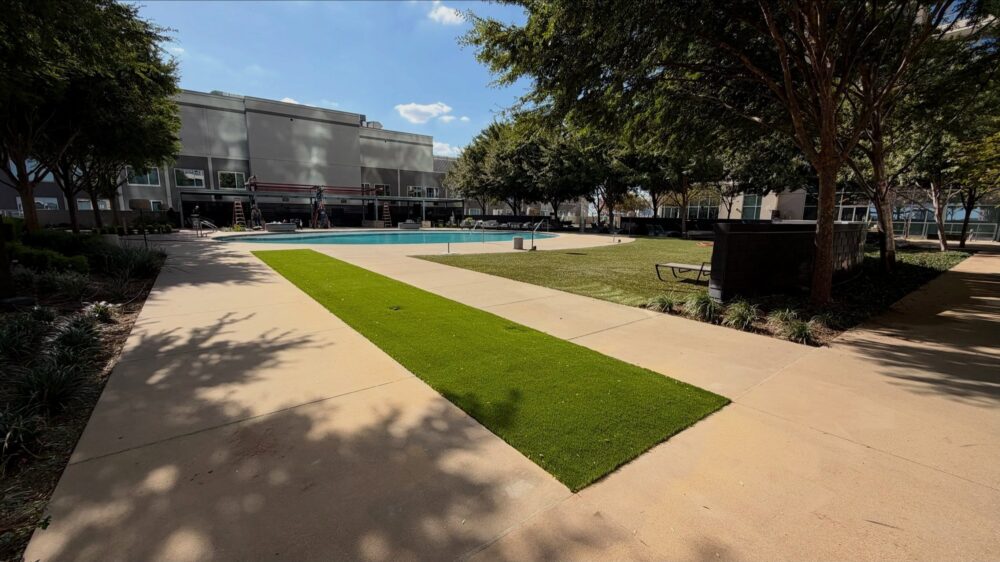
Choosing Artificial Turf for HOA Communities and Shared Outdoor Spaces
Artificial turf can provide a practical alternative to natural grass in community spaces that experience frequent use, inconsistent sunlight, or demanding maintenance schedules.
However, HOA boards should approach synthetic grass installation as a long-term property improvement rather than simply replacing one landscaping material with another.
Which HOA Common Areas Are Best Suited for Artificial Grass?
Artificial grass is often a good fit for HOA common areas where maintaining healthy natural grass is difficult or where consistent appearance is especially important.
Not every shared outdoor area has the same requirements. A decorative entrance landscape, for example, needs different turf characteristics than a playground or pet relief area.
Common HOA applications include:
- Community entrances: Maintain a consistent green appearance in highly visible landscaping areas.
- Courtyards: Create attractive outdoor gathering spaces with reduced mowing requirements.
- Playgrounds: Provide a consistent recreational surface when paired with appropriate impact-attenuating materials.
- Pet areas: Offer designated spaces with drainage and cleaning features suited to animal use.
- Walking paths and seating areas: Incorporate synthetic grass into landscaped spaces where residents gather.
Before choosing a location, boards should consider how frequently the space is used, whether it receives direct sunlight, and how rainwater moves through the property.
Artificial turf is particularly useful when selected for a clearly defined purpose.
How Important Are Drainage and Installation Quality?
Proper drainage and base preparation are essential to the long-term performance of artificial turf in HOA common areas.
Simply placing synthetic grass over existing soil does not create a complete installation system.
A professional installation should address several important components:
- Site evaluation: Identify existing drainage patterns, slopes, and potential obstacles.
- Ground preparation: Remove vegetation and prepare the area for the required base depth.
- Base construction: Install and compact appropriate materials to create a stable foundation.
- Drainage planning: Ensure the turf system and surrounding landscape can manage expected rainfall.
- Turf installation: Secure the material, finish seams and edges, and apply appropriate infill when required.
North Texas communities must also consider local weather conditions.
Dallas-Fort Worth experiences periods of intense summer heat and thunderstorms that can produce significant rainfall. These conditions make material selection and drainage planning especially important.
According to the U.S. Environmental Protection Agency (EPA), green infrastructure and effective stormwater management can help reduce runoff impacts. Although artificial turf is not automatically a stormwater management solution, thoughtful grading and drainage design can help prevent localized water accumulation.
HOA boards should ask prospective installers how the proposed system will handle runoff and whether additional drainage improvements are necessary.
What Should HOA Boards Know About Artificial Turf Costs and Maintenance?
Artificial turf generally requires a larger initial investment than routine natural grass maintenance, but it can reduce several recurring landscaping expenses.
For HOAs, the financial decision should focus on total ownership costs rather than installation price alone.
Potential areas of reduced maintenance include:
- Routine mowing and edging.
- Irrigation needed to maintain natural grass.
- Fertilizer and lawn treatment applications.
- Replacement of worn or damaged natural grass.
- Seasonal lawn maintenance associated with natural growth cycles.
However, artificial turf is not completely maintenance-free.
Shared spaces still require debris removal, periodic cleaning, inspections, and occasional repairs. Pet areas may require more frequent sanitation, while high-traffic areas may need brushing to maintain the turf’s appearance.
The EPA’s WaterSense program emphasizes the importance of efficient outdoor water use. Replacing irrigated natural grass with artificial turf may reduce landscape irrigation demand, although actual savings depend on the property’s existing watering practices.
Boards should request an itemized proposal that explains installation expenses, anticipated maintenance, warranty coverage, and expected replacement considerations.
A realistic comparison helps community leaders make decisions that align with their operating budgets and reserve planning.
Do HOA Boards Need Approval Before Installing Synthetic Grass?
HOA boards should review their governing documents, applicable municipal requirements, and any relevant architectural or landscaping restrictions before approving an artificial turf project.
In Texas, HOA decisions may be affected by association declarations, bylaws, community rules, and applicable provisions of the Texas Property Code.
Requirements can vary depending on the association and the proposed installation.
Before moving forward, boards should confirm:
- Whether board approval is sufficient or a membership vote is required.
- Whether the project fits within approved landscaping budgets.
- Whether local permits or drainage approvals apply.
- Whether community design standards specify landscaping materials.
- Whether accessibility requirements apply to shared recreational spaces.
- Whether playground installations require specific safety standards.
For example, turf installed beneath playground equipment may need an appropriate impact-attenuating system that meets applicable playground safety requirements.
Boards should also consider resident communication.
Explaining the purpose of the project, anticipated construction schedule, and maintenance expectations can help residents understand how the improvement will affect their shared spaces.
When legal or governing-document questions arise, the association should consult its management team or qualified legal counsel.
How Can HOA Boards Choose the Right Artificial Turf Installer?
HOA boards should select an artificial turf installer based on relevant project experience, installation methods, product suitability, and clear communication.
The lowest initial quote does not necessarily represent the best long-term value.
Before approving a contractor, ask these questions:
- Does the company have experience with commercial or HOA landscaping projects?
- What turf materials are recommended for the expected level of foot traffic?
- How will drainage and base preparation be handled?
- What maintenance will the completed surface require?
- What product and workmanship warranties are included?
- How will the installation affect resident access to common areas?
At All American Turf Solutions, our commercial and HOA turf services focus on creating durable, attractive outdoor environments. Our team emphasizes careful grading, base preparation, product selection, and communication throughout the installation process.
For HOA communities in Plano, Frisco-area neighborhoods, Denton, Southlake, and surrounding Dallas-Fort Worth communities, selecting turf appropriate for North Texas conditions is an important part of planning a successful project.
Frequently Asked Questions About HOA Artificial Turf Installation
Is artificial turf a good investment for HOA common areas?
Artificial turf can be a worthwhile investment for HOA communities seeking reduced irrigation, less mowing, and consistent landscaping appearance. Its overall value depends on installation costs, maintenance needs, expected usage, and product lifespan.
How long does commercial artificial turf last?
Commercial artificial turf lifespan varies based on material quality, foot traffic, sunlight exposure, maintenance, and installation conditions. HOA boards should request product-specific durability information and written warranty details before purchasing.
Can artificial turf be installed in HOA playgrounds?
Yes. Artificial turf can be installed in playgrounds when the complete surfacing system is designed for the intended use. Areas beneath playground equipment may require specialized padding and documented compliance with applicable fall-impact safety standards.
Does artificial turf require regular maintenance in community spaces?
Yes. Artificial turf requires periodic debris removal, cleaning, brushing, and inspections. Maintenance frequency depends on traffic levels, surrounding trees, pet activity, and the specific turf system.
Upgrade Your HOA Common Areas With All American Turf Solutions
Artificial turf can help HOA communities create attractive, functional outdoor spaces while reducing several traditional lawn maintenance responsibilities.
The key is choosing the right turf system, planning for proper drainage, and working with an experienced installation team that understands the demands of shared landscapes.
At All American Turf Solutions, we work with HOAs and property managers to develop artificial turf solutions tailored to their properties and community needs.
Ready to explore artificial turf for your HOA common areas? Contact All American Turf Solutions to discuss your community’s landscaping goals and request a professional consultation.